
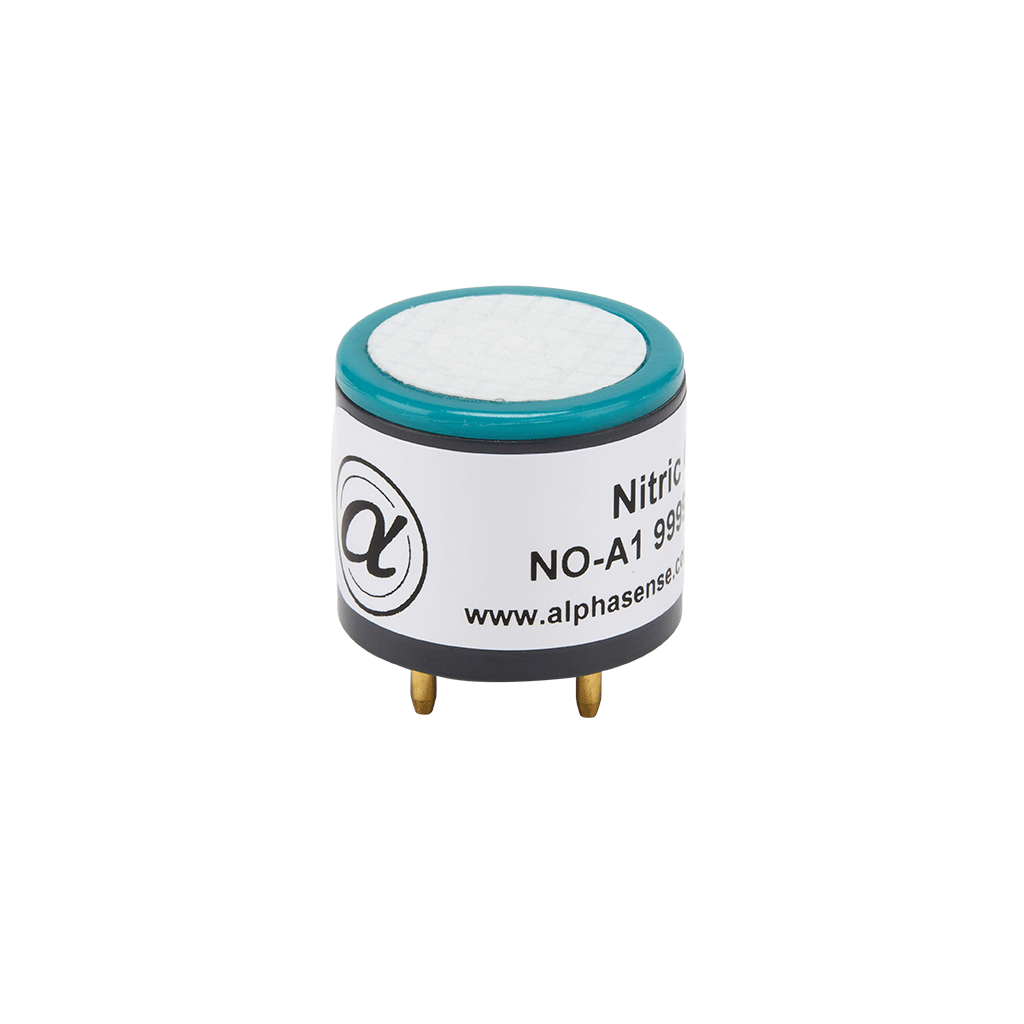
NO-A1 Nitric Oxide Sensor
NO Gas Sensor, Electrochemical, A-Series, 0–250 ppm NO
Reliable nitric oxide monitoring for industrial safety and emissions applications.
The NO-A1 sensor is a ppm-level nitric oxide sensor designed for a broad variety of instrumentation, including portable gas detectors and fixed systems used in industrial safety, environmental air quality analysis and process control. The standard 0–250 ppm NO-A1 sensor is ideal for general and industrial safety and emissions monitoring.
Available in the widely adopted A-Series footprint and as NO-A1+ with Integrated Smart Technology, it supports plug-and-play operation with on-board temperature sensing and stored calibration data to simplify instrument design
| Request Quote | Find on Webstore | View Datasheet |
Key Specifications:
|
Sensor Model |
Target Gas |
Package Size |
Concentration Range |
Sensitivity |
T90 Response Time |
Bias |
Lifetime |
|
NO-A1 |
Nitric Oxide (NO) |
A-Series, 3-electrode |
0–250 ppm NO |
320 to 480 nA / ppm in 50 ppm NO |
< 45 s (0 to 50 ppm step) |
Required: +300 mV |
> 24 months (24-month warranted) |
|
Feature |
Benefit |
|
Standard A-Series nitric oxide sensor |
Ideal baseline choice for instruments targeting general and industrial NO safety monitoring |
|
0–250 ppm detection range with +300 mV bias |
Covers typical NO exposure and emissions levels in industrial environments |
|
A-Series 3-electrode package compatible with other Alphasense toxic sensors |
Simplifies mechanical integration and platform reuse across multiple gas channels |
|
Low zero current and low drift for stable long-term performance |
Supports stable low-level alarm thresholds with minimal recalibration |
|
Available as NO-A1+ with Integrated Smart Technology (IST board) |
Enables plug-and-play sensor replacement and streamlined temperature compensation |
|
> 24-month operational life for reduced maintenance |
Helps minimise ownership costs for OEMs and end users |
-
Technical Data Sheet
Application Notes
- Health and Safety Information
- Protecting/Handling Oxygen & Toxic Sensors
- Pressure Changes Can Cause False Alarms
- Design Considerations in Gas Sampling
- Intrinsic Safety Information for Approvals
Safety Documents
Related Products