
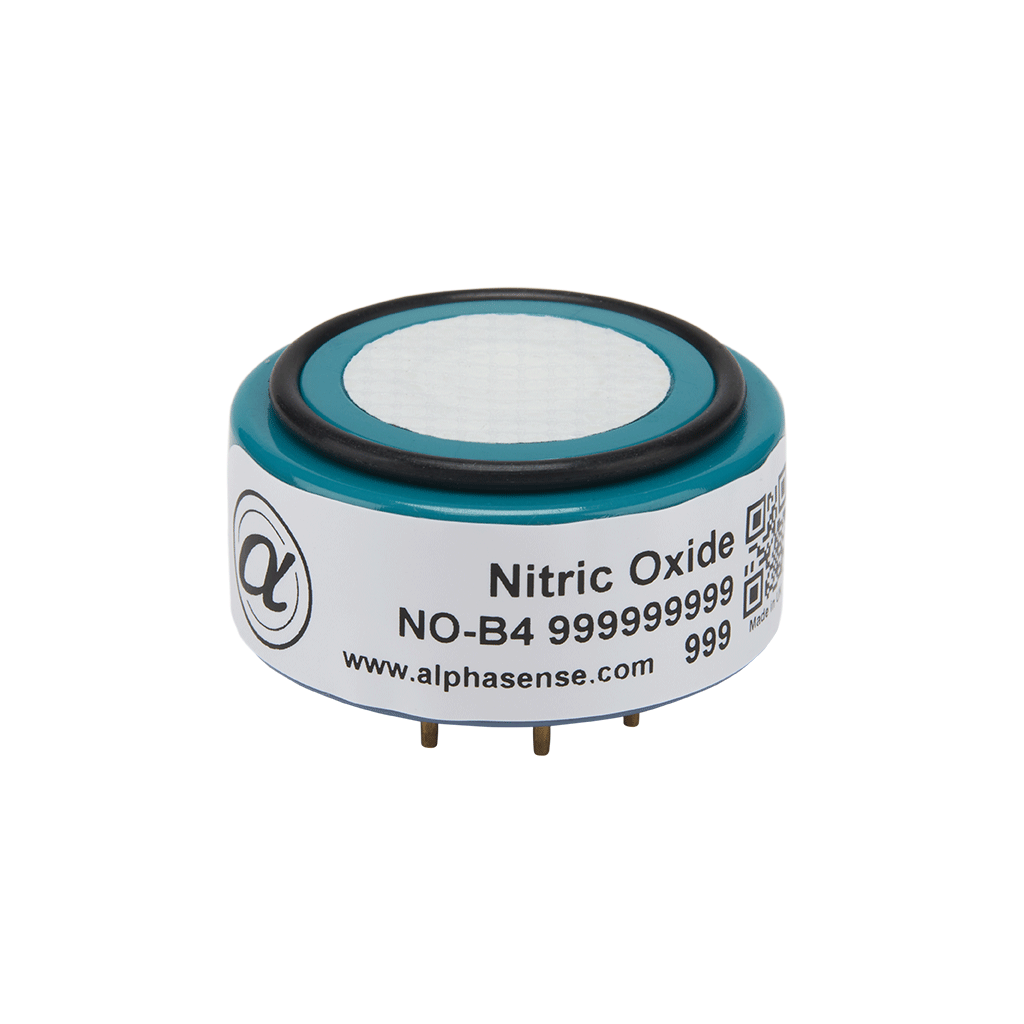
NO-B4 Nitric Oxide Sensor
NO Gas Sensor, Electrochemical, B-Series, 0–20 ppm NO (ppb-level resolution)
Best-in-class baseline stability for ambient nitric oxide air quality monitoring
The NO-B4 sensor is a ppb-capable nitric oxide sensor designed for environmental air quality applications that demand low noise and excellent baseline stability. These PPB-level NO-B4 sensors are ideal for fixed and portable air quality monitors using the B-Series 4-electrode platform.
In combination with the Alphasense Individual Sensor Board (ISB) low-noise circuit, NO-B4 sensors can achieve noise levels around 15 ppb with further reductions possible using digital smoothing, making it ideal for high-performance air quality networks and fixed installations.
| Request Quote | Find on Webstore | View Datasheet |
Key Specifications:
|
Sensor Model |
Target Gas |
Package Size |
Concentration Range |
Sensitivity |
T90 Response Time |
Bias |
Lifetime |
|
NO-B4 |
Nitric Oxide (NO) |
B-Series, 4-electrode |
0–20 ppm NO |
500 to 850 nA / ppm in 2 ppm NO |
< 45 s (0 to 2 ppm step) |
Required: +200 mV |
> 24 months (24-month warranted, until 50% original signal) |
|
Feature |
Benefit |
|
4-electrode B-Series NO sensor with ppb-level resolution |
Supports high-quality ambient NO measurements in air quality networks |
|
0–20 ppm measurement range for ambient and urban NO monitoring |
Provides suitable dynamic range for typical urban and roadside NO levels |
|
Low-noise performance when used with the Alphasense ISB circuit |
Reduces detection limits and improves data quality in low-concentration environments |
|
Stable zero and low drift for long-term baseline integrity |
Helps maintain stable baselines, reducing the need for frequent zeroing |
|
Designed for mainly fixed air quality applications with high humidity tolerance |
Well suited to outdoor, high-humidity sites where reliability is critical |
|
> 24-month operating life (until 50% of original signal) |
Delivers long service life to minimise field maintenance and operational cost |
-
Technical Data Sheet
Application Notes
- Health and Safety Information
- Protecting/Handling Oxygen & Toxic Sensors
- Pressure Changes Can Cause False Alarms
- Design Considerations in Gas Sampling
- Intrinsic Safety Information for Approvals
Safety Documents
Related Products