
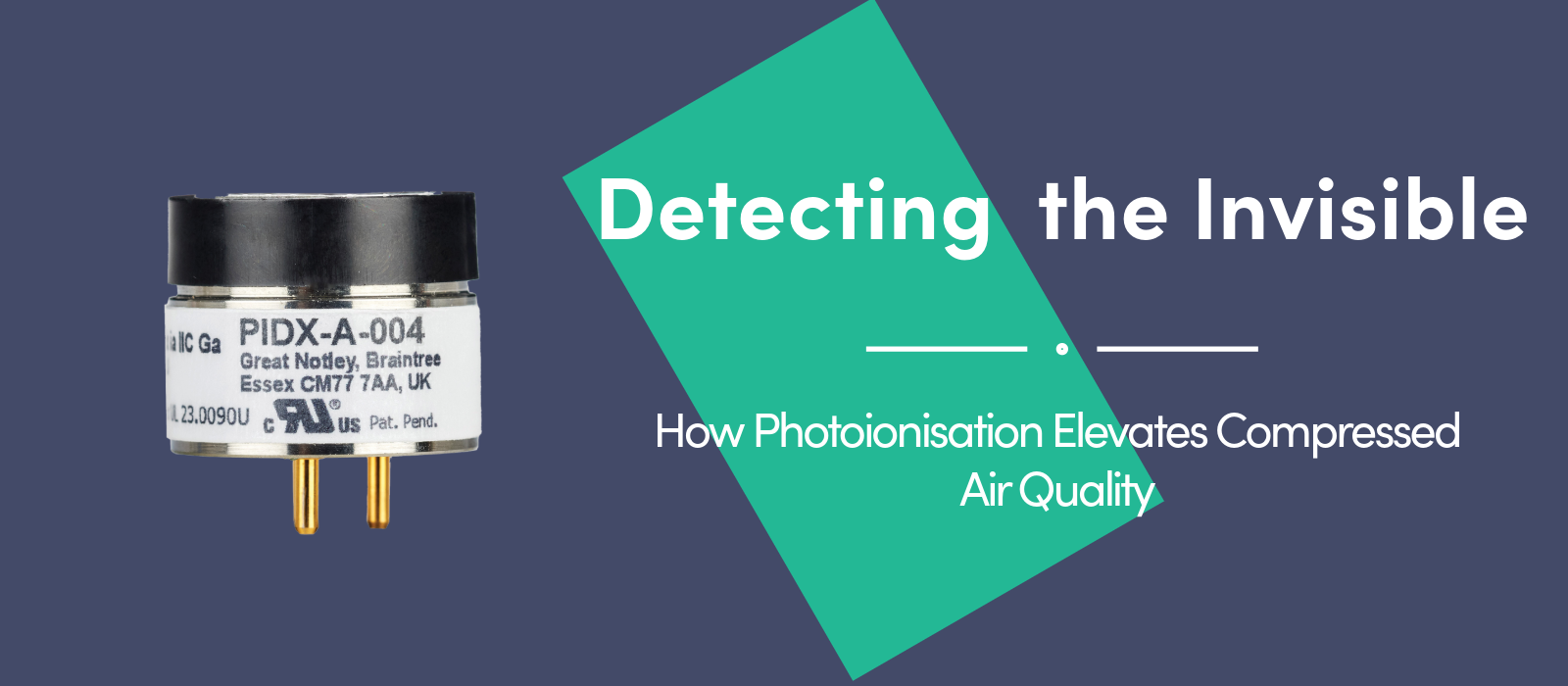
Detecting the Invisible: How Photoionisation Elevates Compressed Air Quality
What Makes Photoionisation the Key to Clean Compressed Air?
Compressed air is an essential utility across industries, powering everything from pneumatic tools to manufacturing processes. However, ensuring the purity of compressed air is critical, as contaminants like volatile organic compounds (VOCs), can compromise system efficiency, product quality, and workplace safety. Among the technologies available for air quality monitoring, photoionisation detection (PID) stands out as the most sensitive technique for trace ppb VOC measurements.
The Challenge of VOCs in Compressed Air Systems
VOCs are organic chemicals that can exist as gases or vapours at room temperature. In compressed air systems, these contaminants can originate from compressor oil, lubricants, cleaning solvents, or environmental seepage. The risks they pose include:
- Product Contamination: In industries like pharmaceuticals, food processing, and electronics, even trace amounts of VOCs can compromise product integrity.
- Equipment Damage: VOCs can corrode pipelines and wear out seals, leading to higher maintenance costs and operational disruptions.
- Health and Safety Hazards: Prolonged exposure to certain VOCs is hazardous to workers' health, necessitating rigorous air quality standards.
The need to detect and mitigate VOCs is clear, but traditional monitoring methods often fall short in sensitivity or real-time capability. This is where photoionisation detectors excel.
How Photoionisation Detection Works
Photoionisation detectors use high-energy ultraviolet (UV) light to ionise VOC molecules. The ionisation process generates an electrical signal proportional to the concentration of VOCs, allowing precise and rapid measurement. Unlike other detection methods, PIDs offer:
- Ultra-Sensitivity: Capable of detecting VOCs at concentrations as low as parts per billion (ppb). For instance, the Alphasense PIDX-A-004 achieves a minimum detection level of 0.5 ppb, making it ideal for environments requiring ultra-clean air.
- Wide Dynamic Range: A linear range of 0-4 ppm ensures that PIDs can handle both trace-level monitoring and higher contaminant levels without losing accuracy.
- ATEX Certification: The PIDX-A-004, along with others in its series, is ATEX-rated, meaning it meets stringent safety standards for use in explosive or hazardous environments. This ensures safe operation in industries dealing with flammable gases or vapours.
- Versatility: PIDs can detect a broad spectrum of VOCs, including hydrocarbons, ketones, and alcohols, making them adaptable across industries.
Why Photoionisation Is the Key to Clean Air
Several characteristics make photoionisation uniquely suited for ensuring clean compressed air:1. Real-Time Online Monitoring
PIDs provide instant feedback, allowing operators to address contamination issues before they escalate. This rapid response capability is crucial in dynamic production environments.
2. Unparalleled Sensitivity
Devices like the Alphasense PIDX-A-004 can detect VOC levels far below thresholds that could harm products or equipment. Such sensitivity ensures compliance with stringent air purity standards, such as ISO 8573-1.
3. Cost-Effective Maintenance
By detecting contaminants early, PIDs help prevent damage to compressed air systems, reducing repair costs and prolonging equipment life.
4. Regulatory Compliance and Worker Safety
VOC monitoring with PIDs supports adherence to environmental and workplace safety regulations, safeguarding both employees and organisational reputation. The ATEX rating of the PIDX-A-004 and related devices further guarantees safe operation in environments where explosive atmospheres may be present.
Practical Applications of PIDs in Compressed Air Systems
Industries leveraging PIDs for VOC monitoring have reported significant benefits:
- Pharmaceuticals and Food Processing: Ensuring that compressed air used in packaging or product contact processes is free from harmful VOCs.
- Electronics Manufacturing: Preventing contamination that could compromise the performance of sensitive components.
- General Industry: Detecting leaks or spills in compressed air lines before they affect productivity or safety.
The Path to Cleaner Air
Clean compressed air is non-negotiable in industries where precision, safety, and product quality are paramount. Photoionisation detection, with its unmatched sensitivity and adaptability, is a cornerstone technology for VOC monitoring. By integrating advanced PIDs like the Alphasense PIDX-A-004, industries can proactively address contamination risks, including those originating from compressor oil, optimise maintenance, and ensure compliance with air quality standards. In the quest for cleaner air, photoionisation isn’t just a solution—it’s the key to achieving operational excellence.
Please contact sensors.alphasense@alphasense.com for more information. We look forward to assisting you with this innovative new product.
If you would like to stay updated about new developments at Alphasense, click here to join our email newsletter mailing list. Or to make a product enquiry, email sensors.alphasense@ametek.com